Monday, July 6, 2009

Does Capitalism Work?

Here is a map depicting how each states' GDP compares to other countries around the world:


What system can generate such a circumstance? How can comparatively small states like New Jersey can produce more than the geographical area of Russia? Is it merely that New Jersey has more natural resources than all of Russia? Or that the people of New Jersey are smarter than the people of Russia? Or is it related to each states' respective proximity to the natural state of liberty?

From the index of economic and political freedom:
"State involvement in economic activity remains considerable, and institutional constraints on economic freedom are severe. Non-tariff barriers add significantly to the cost of trade. Inflation is high, and prices are heavily controlled and influenced by the government. Virtually all foreign investment faces official and unofficial hurdles, including bureaucratic inconsistency, corruption, and outright restrictions in lucrative sectors like energy. Corruption weakens the rule of law and increases the fragility of property rights and the arbitrariness of law enforcement."

The answer is quite simple - the government acts as an obstacle to natural market activity. Price controls and excessive bureaucracy prevent individuals from disposing of their property how they see fit. A weakened rule of law and barriers to trade stifle risk taking and entrepreneurship. All of these things lower productivity. The truth becomes clear - it does not matter how many natural resources a country has, nor how intelligent the population is. If government will not allow people to trade freely with each other, guarantee the security of property and establish the rule of law, productivity and quality of life will suffer.

Thomas Jefferson, George Washington, and the rest of the founders took a different approach. They recognized both the economic and personal woes that emerge from a bloated State. The United States was founded on the principles of individual liberty and the rule of law, precisely what is lacking in Russia. Capitalism works, and one need to look no further than to compare New Jersey to Russia.

* It should be noted that New Jersey outproduces Russia despite being one of the most heavily taxed and regulated State's in the Union.

Wednesday, July 1, 2009

Propaganda Art Show (July 2009)

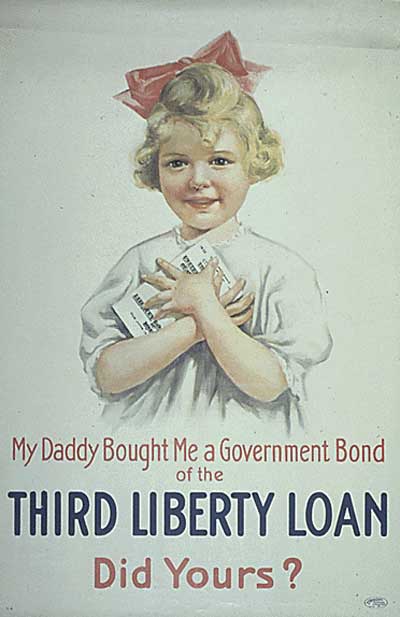
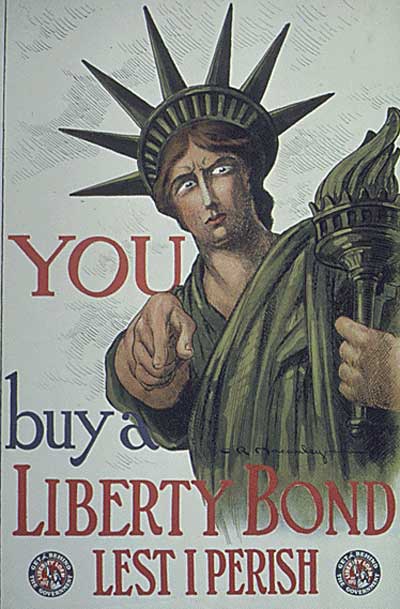
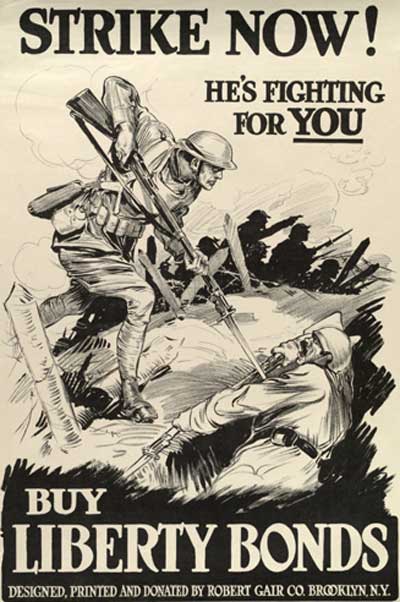
I am going to try to offer these occasionally. I think they are interesting. I hope you do too! This is all US government propaganda. Next time I will find some other state's.


Some videos for thought

Get your popcorn ready... :)

This man has some interesting insights into market behavior, inflation and deflation, and China's currency policy. No really, it is interesting!


State Capitalism (or fascism) in the USA


Murray Rothbard speaking in 1989 on "The Current State of World Affairs"


Enjoy!

Friday, June 26, 2009

I, Pencil


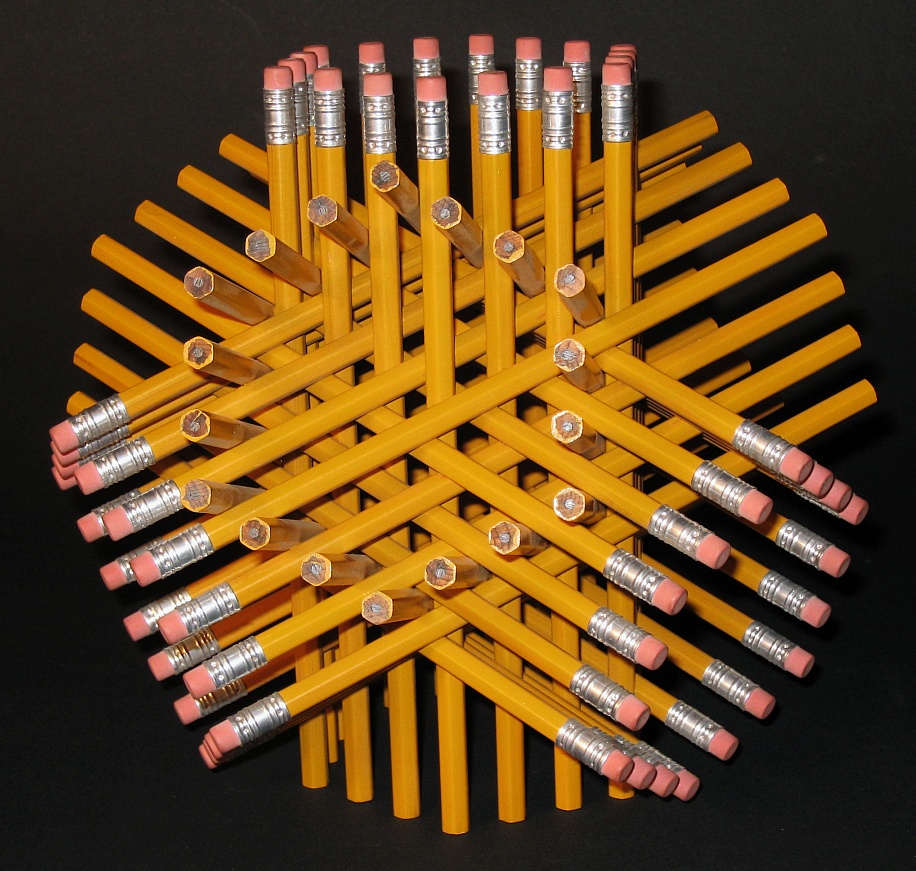
Cafe Hayek directed me to this essay, which I enjoyed thoroughly. It is the story of how a pencil is made, which seems boring at first, but the perspective taken illuminates the wonder of free markets beautifully.

Here are some excerpts:

You may wonder why I should write a genealogy. Well, to begin with, my story is interesting. And, next, I am a mystery—more so than a tree or a sunset or even a flash of lightning. But, sadly, I am taken for granted by those who use me, as if I were a mere incident and without background. This supercilious attitude relegates me to the level of the commonplace. This is a species of the grievous error in which mankind cannot too long persist without peril. For, the wise G. K. Chesterton observed, "We are perishing for want of wonder, not for want of wonders."
Actually, millions of human beings have had a hand in my creation, no one of whom even knows more than a very few of the others. Now, you may say that I go too far in relating the picker of a coffee berry in far off Brazil and food growers elsewhere to my creation; that this is an extreme position. I shall stand by my claim. There isn't a single person in all these millions, including the president of the pencil company, who contributes more than a tiny, infinitesimal bit of know-how. From the standpoint of know-how the only difference between the miner of graphite in Ceylon and the logger in Oregon is in the type of know-how. Neither the miner nor the logger can be dispensed with, any more than can the chemist at the factory or the worker in the oil field—paraffin being a by-product of petroleum.
I, Pencil, am a complex combination of miracles: a tree, zinc, copper, graphite, and so on. But to these miracles which manifest themselves in Nature an even more extraordinary miracle has been added: the configuration of creative human energies—millions of tiny know-hows configurating naturally and spontaneously in response to human necessity and desire and in the absence of any human master-minding! Since only God can make a tree, I insist that only God could make me. Man can no more direct these millions of know-hows to bring me into being than he can put molecules together to create a tree.
Don Boudreaux adds,
Whenever I hear or read someone proclaim that "the market doesn't work," I try (if the situation permits) to ask him or her how is it that an ordinary pencil exists. Its production requires the cooperation of literally millions of people from around the world. Not one in one-thousand of these people know each other. Many of them, were they to meet, would positively hate each other. And yet, pencils exist in appropriate abundance, and can be acquired almost free of charge. (If you're in the United States, go up to strangers on the street, in shopping malls, or at your school or workplace and ask for a pencil. You'll not wait long before someone gives you one without expecting it to be returned. I do this experiment frequently; it works.)
To be fair, lets not forget to consider the statist take on this whole process:

But, but you need a government person to supervise the transaction. So first we must pass laws, and then create the departments of pencils. Then when someone's pencil tip breaks, they will call their senator and demand government do something about breaking pencil tips. A new set of regulations will appear, with the promise that this time it will fix the problem. The cost of pencils go up, sales go down, and the pencil lobby descends on Washington to add pens to the regulations. The department of pencils gets bigger, but pencil tips keep breaking and wearing out.

I will let someone else finish the story, as it never ends. (from comments @ Cafe Hayek)

I think there is a product out there for each person that will make the idea of "I, Pencil" clear to them. For me it is the existence of the grocery store. The myriad of products, some at incredibly cheap prices, oftentimes appear miraculous to me. The cost of a plastic bag at Wegmans, I am told by the cashier, is 25 cents. The cost of a can of corn, on sale, is 39 cents. That a can of corn - with all the division of labor that went into growing and harvesting the corn, the canning process, designing the label, and being shipped throughout the country - costs marginally more than a plastic bag is in my mind a great wonder in the world.

Thursday, June 25, 2009

Fresh produce 6.25.09

Mish has a fantastic post today using Dr. Seuss to explain economic realities.

1. Thidwick the Big-Hearted Moose, an illustrated tale.

2. While the Fed is getting more power, no one is forcing them to face the consequences of a recent cover up.

3. Spezify is a very interesting new search engine. Compare it to Wolfram Alpha and Bing. Or the classic.

4. Legislators in Cali want to pay for their debts in IOU's. My question is, who in their right mind would lend them money?

Monday, June 15, 2009

States' Rights and the Future of the Republic(s)


Some time ago a former KGB agent predicted the breakup of the USA. At the time I scoffed at his prediction, and wrote it off as a bitter rant from someone who wished the USSR was reunited and a global power. Yet after some thought (and reading Watchmen) I realized that there is no magical quality to the USA. There is absolutely no reason why the empire could not falter and dissolve. Here are some real organizations and signs about the roots of a new secession/States' rights movement not seen in my brief lifetime.

1. The Wall Street Journal on the dynamics of liberty and secession, and the future of the States in America.

2. The Christian Exodus, a secessionist movement based in S. Carolina. In their words: "The initial goal was to move thousands of Christian constitutionalists to South Carolina to accelerate the return to self-government based upon Christian principles at the local and State level."

3. The Patrick Henry Caucus was formed to organize legislators and find ways to strengthen the 10th Amendment. In their words: "We affirm that the federal government may exercise only those rights and powers that are specifically granted unto it by the Constitution and no others. We reassert the sovereignty and rights of the individual states."

4. The Free State Project was organized to concentrate the efforts of liberty-loving folk in one state, and use the political system to preserve and reinforce self-government. In their words: "...the fullest practical effort toward the creation of a society in which the maximum role of civil government is the protection of life, liberty, and property."

5. The Second Vermont Republic is, in their words, "... a nonviolent citizens' network and think tank opposed to the tyranny of Corporate America and the U.S. government, and committed to the return of Vermont to its status as an independent republic and more broadly to the dissolution of the Union."

There is a common thread in all of these organizations. Many Americans still identify with the concept of self-government. If there is one principle that the USA was founded upon, it is self-government. There is a strong undercurrent of conservatism in the USA. Democratic states (Vermont) and Republican states (New Hampshire) both desire to preserve their right to self-governance. The WSJ article makes a compelling case that things would be better if what we know to be the Union were broken up into several nation-states. I tend to agree.